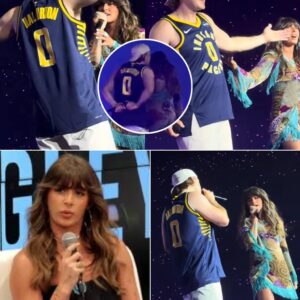
““Texas Fire Meets Texas Grace — Kacey Musgraves and Miranda Lambert Are Finally Singing the Truth Together” For years, country music fans sensed the distance. Two Texas women. Two unmistakable voices. Two careers shaped by grit, wit, and the kind of honesty that leaves a mark. Now, on “Horses and Divorces,” Kacey Musgraves and Miranda Lambert are not just sharing a track — they are stepping into the same story at last. The duet appears on Musgraves’ newly announced album Middle of Nowhere, due May 1, 2026, and arrives after Musgraves openly acknowledged the long-rumored tension between them before reconnecting for this song. That is what makes this collaboration feel bigger than a feature credit. It sounds like history, humor, bruises, survival — and two Texas songwriters old enough to know that the sharpest truths are often the ones you sing smiling.” ▶️ 𝐂𝐥𝐢𝐜𝐤 𝐭𝐨 𝐩𝐥𝐚𝐲 𝐅𝐮𝐥𝐥 𝐕𝐢𝐝𝐞𝐨!

When Two Texas Truth-Tellers Finally Shared the Same Flame

Introduction

When Two Texas Truth-Tellers Finally Shared the Same Flame

Some collaborations feel clever. Others feel inevitable. Texas Fire Meets Texas Grace — Kacey Musgraves and Miranda Lambert Are Finally Singing the Truth Together” belongs to the second category. It carries the kind of emotional weight that country music fans immediately understand, because this is not simply about two famous names appearing on the same track. It is about timing, history, memory, and the rare power of two artists arriving at the same song only after life has given them enough scars to sing it honestly.

For years, listeners could sense that Kacey Musgraves and Miranda Lambert occupied neighboring but separate rooms in the Texas imagination. Both are unmistakably rooted in the same landscape, yet they have always carried themselves differently. Miranda often brings the heat of defiance, the rough edges, the wound that answers back. Kacey, by contrast, often delivers her sharpest lines with kind of calm elegance, the smile that makes the truth cut even deeper. Put them together, and what emerges is not contradiction but chemistry. One burns. One glows. Both know exactly how to turn lived experience into song.

Kacey + Miranda Trade Jabs, But Fans Suspect It's a Duet Tease

That is why this duet feels larger than routine industry collaboration. Texas Fire Meets Texas Grace — Kacey Musgraves and Miranda Lambert Are Finally Singing the Truth Together” suggests something that country music has always understood at its best: truth sounds richer when it comes from voices that have earned it. song like “Horses and Divorces” already carries title full of dust, wit, and history. It sounds like open highways, old hurts, dry humor, and women who have lived long enough to stop apologizing for what life taught them. In lesser hands, that kind of title could feel like posture. In the hands of Kacey and Miranda, it feels like testimony with raised eyebrow.

What makes the moment especially compelling is the sense of distance finally giving way to recognition. Country fans have long been drawn to stories beneath the songs, and the possibility that there was once tension between these two only adds depth to the emotional landscape. Not because conflict is glamorous, but because reconciliation—especially artistic reconciliation—can produce kind of honesty that politeness alone never could. When two strong voices meet after years of separate journeys, they do not sound cautious. They sound seasoned. They sound like people who know exactly what they mean when they sing.

Kacey Musgraves Addresses Rumored Miranda Lambert Feud

For older listeners, that matters. They hear more than duet. They hear two Texas women who have survived success, expectation, misunderstanding, reinvention, and the long, private work of becoming themselves in public. They hear humor sharpened by pain, grace strengthened by endurance, and confidence that no longer needs permission. That is why this collaboration feels so satisfying. It does not sound like publicity move. It sounds like timing finally catching up with truth.

In the end, Texas Fire Meets Texas Grace — Kacey Musgraves and Miranda Lambert Are Finally Singing the Truth Together” resonates because it promises more than harmony. It promises perspective. It promises wit with weather on it. And above all, it promises the deep country pleasure of hearing two women from the same wide state stand in the same so

Related Posts

“””I DON’T CARE WHO YOU ARE — YOU DON’T DISRESPECT THE PEOPLE WHO SERVED THIS COUNTRY.”” — Miranda Lambert JUST SHUT DOWN HIS OWN SHOW. Miranda Lambert was getting ready for a Nashville charity showcase — veterans invited backstage, everyone in good spirits. Then word reached her that a group of young performers had acted disrespectfully toward those same veterans. She didn’t wait. She didn’t ask twice. She stopped his prep, confirmed the reports with staff, and personally ordered the group removed from the venue. Banned. Done. No dramatic speech. No cameras rolling for content. Just a man who meant what he said. Witnesses say the room went quiet. Nobody argued. Nobody questioned it. Because everyone there knew — those veterans earned their place in that room. What exactly happened backstage that pushed Miranda over the edge — and what the performers said when they were escorted out — is still coming to light… ▶️ 𝐂𝐥𝐢𝐜𝐤 𝐭𝐨 𝐩𝐥𝐚𝐲 𝐅𝐮𝐥𝐥 𝐕𝐢𝐝𝐞𝐨!

The Night Respect Drew a Hard Line: Why This Miranda Lambert Story Struck a Nerve Far Beyond Nashville Introduction The Night Respect Drew a Hard Line: Why This Miranda Lambert Story Struck a Nerve Far Beyond Nashville There are some moments in country music that feel bigger than the stage, bigger than the spotlight, and bigger than the celebrity at the center of them. They are the moments that remind people why this genre has always meant so much to older listeners—because at its best, country music has never only been about hit songs or applause. It has been about character. About gratitude. About knowing who came before you and why that matters. That is exactly why the story behind “I DON’T CARE WHO YOU ARE — YOU DON’T DISRESPECT THE PEOPLE WHO SERVED THIS COUNTRY.” — MIRANDA LAMBERT JUST SHUT DOWN HIS OWN SHOW. hits with such force. If this account is true in the way it has been told, then what happened backstage in Nashville was not simply a tense disagreement or a moment of bad manners. It was something deeper. It was a collision between two very different ideas of respect: one rooted in humility, honor, and gratitude, and the other shaped by carelessness, entitlement, and a failure to understand the weight of sacrifice. For many readers—especially those who grew up in households where military service was treated with quiet reverence—that distinction is impossible to ignore. What makes this story so powerful is not noise, but restraint. There was no public performance attached to it, no speech crafted for headlines, no attempt to turn the situation into a grand act of self-promotion. According to the version being shared, the response was immediate, direct, and final. That is what gives the story its dramatic power. In an era when too many public figures seem eager to turn every conflict into content, the image here is far more striking: a line was crossed, the facts were confirmed, and a decision was made. No theatrics. No indulgence. Just consequence. That is also why this moment feels so distinctly country. Country music has always carried a moral undercurrent. Even when the songs are about heartbreak, home, family, or survival, there is usually an unspoken code beneath them. You respect your elders. You honor sacrifice. You do not mock the people who stood in places most of us would never have the courage to stand. The veterans invited into that room were not decoration for an event. They were not background figures. They were, in every meaningful sense, guests of honor. And that is why the silence witnesses describe feels so important. A room does not go quiet like that unless people understand, all at once, that something serious has happened. Not a publicity moment. Not an artist’s mood. A principle. A boundary. A reminder that fame may command attention, but it does not outrank dignity….

“ON DOLLY PARTON’S 80TH BIRTHDAY, HER SONG CAME BACK TO HER — QUIETLY. Last night, something rare happened. Carrie Underwood and Miranda Lambert walked onstage together and began I Will Always Love You. No drama. No show-off notes. Just respect. Carrie’s clear voice held steady. Miranda carried time and tenderness. The room softened. People leaned in without realizing it. In the audience, Dolly Parton didn’t perform back. She just listened. The woman who once wrote the song, now receiving it. Returned. Gently. It wasn’t about proving anything. It felt like gratitude passed from one generation to another. Quiet. Honest. And somehow louder than applause.” ▶️ 𝐂𝐥𝐢𝐜𝐤 𝐭𝐨 𝐩𝐥𝐚𝐲 𝐅𝐮𝐥𝐥 𝐕𝐢𝐝𝐞𝐨!

When the Song Returned Home: Dolly Parton’s 80th Birthday Became a Moment Country Music Will Never Forget Introduction When the Song Returned Home: Dolly Parton’s 80th Birthday Became a Moment Country Music Will Never Forget There are tribute performances, and then there are moments so delicate, so emotionally precise, that they seem to step outside the usual language of concerts altogether. That is what makes ON DOLLY PARTON’S 80TH BIRTHDAY, HER SONG CAME BACK TO HER — QUIETLY. such a powerful idea. It is not simply a headline. It feels like a scene already wrapped in memory, as if everyone in the room understood they were witnessing something that did not need spectacle to become unforgettable. What gives this moment its unusual beauty is its restraint. In today’s musical culture, tribute performances can sometimes lean toward excess—bigger notes, bigger gestures, bigger attempts to prove worthiness in the shadow of a legend. But this imagined scene moves in the opposite direction. Carrie Underwood and Miranda Lambert do not step forward to overpower the occasion. They step forward to honor it. That difference matters. It means the performance is not about display, but devotion. For older listeners especially, that distinction carries real emotional weight. Dolly Parton is not simply a beloved performer; she is a keeper of memory for several generations. Her songs have accompanied courtships, heartbreaks, weddings, long drives, family kitchens, and quiet evenings when the radio seemed to know exactly what the heart was carrying. “I Will Always Love You” in particular belongs to that rare class of songs that have outgrown their own success. It is no longer just a composition. It is an emotional inheritance. That is why ON DOLLY PARTON’S 80TH BIRTHDAY, HER SONG CAME BACK TO HER — QUIETLY. feels so resonant. The song is no longer traveling outward from the woman who wrote it. It is returning to her. There is something profoundly moving in that reversal. Dolly, who once gave the song to the world with all its grace, ache, and generosity, now sits and receives it back—not as a commercial triumph, not as a standard, but as an offering. Carrie’s role in this image is beautifully clear: steadiness, purity, control. Miranda brings something different, something weathered and emotionally textured. Together, their voices suggest two branches of country music meeting in common purpose. One does not cancel the other. One does not compete with the other. They simply serve the song. And in doing so, they serve Dolly….

“MIRANDA LAMBERT SCREAMED INTO THE MIC TO CUT THE MUSIC THE MOMENT SHE SAW SECURITY DRAGGING A BOY AWAY. During a sold-out performance, everything was going perfectly until Miranda spotted a commotion in the front row. A scruffy little boy, clutching a bouquet of wilted wildflowers, was being blocked by security for not having a ticket. Instead of continuing to sing, Miranda marched straight to the edge of the stage and signaled the band to silence. She bent down, not caring that her expensive, sparkling gown was sweeping across the dusty floor, and reached out to pull the boy up. The entire arena held its breath. It turned out, the boy had walked 10 miles just to give her something his mother had left behind before she passed away… What the boy said next made Miranda break down in tears right on live television…””””” ▶️ 𝐂𝐥𝐢𝐜𝐤 𝐭𝐨 𝐩𝐥𝐚𝐲 𝐅𝐮𝐥𝐥 𝐕𝐢𝐝𝐞𝐨!

Introduction Miranda Lambert Stopped the Show for One Small Boy — and What Happened Next Left the Entire Arena in Tears There are moments in live music when the performance stops being about the setlist, the lights, or the applause. It becomes something else entirely—something raw, human, and impossible to rehearse. That is the emotional force at the center of “MIRANDA LAMBERT SCREAMED INTO THE MIC TO CUT THE MUSIC THE MOMENT SHE SAW SECURITY DRAGGING A BOY AWAY.” It reads like a headline built for shock, but what gives it lasting power is not the disruption. It is the compassion that followed. Miranda Lambert has always carried a certain toughness onto the stage. Her voice has grit in it, her presence has backbone, and even at her most glamorous, she has never seemed fragile in the public imagination. That is part of why this moment feels so striking. In the middle of a sold-out show, with thousands of eyes fixed on her and the machinery of a major performance moving exactly as planned, she notices something others might have ignored—a little boy in distress near the front row, clutching a bouquet of wilted wildflowers, being pushed back because he did not belong there by the usual rules. Most performers, even kind ones, might have trusted staff to handle it. Miranda did the opposite. She stopped the music itself. That decision changes everything in the story. Music, especially in an arena, has momentum. It is designed to sweep people forward. But when Miranda cut through that momentum, she did more than interrupt a concert. She declared that whatever was happening at the edge of the stage mattered more than the song. For older listeners, that detail carries enormous weight. It speaks to character. It suggests instinctive mercy rather than image management. She did not pause for drama. She reacted because something in her heart told her she had to. The image of her stepping forward, lowering herself to the dusty edge of the stage, and reaching for the boy is what gives the scene its emotional center. Suddenly, the distance between star and stranger disappears. The expensive gown no longer matters. The cameras no longer matter. The only thing that matters is the child and the reason he came. And when we learn that he had walked ten miles carrying flowers left behind by his mother before she passed away, the story moves into even deeper territory. This is no longer about fan devotion in the ordinary sense. It is about grief finding its way to music. It is about a child carrying memory in his hands and hoping a voice he trusted would understand. That is why the moment becomes unforgettable. Miranda Lambert is often celebrated for strength, edge, and fire. But scenes like this remind audiences that the deepest strength is often tenderness. “MIRANDA LAMBERT SCREAMED INTO THE MIC TO CUT THE MUSIC THE MOMENT SHE SAW SECURITY DRAGGING A BOY AWAY.” is powerful not because it shows a star controlling a room, but because it shows a woman willing to stop everything for pain she recognized in someone else. What the boy said next may have broken her composure, but perhaps that was the truest part of all. Sometimes the greatest moment in a concert is not the loudest note. Sometimes it is the instant a song gives way to compassion, and an arena full of strangers remembers what it means to feel together.

““Miranda Lambert’s Voice Broke, Texas Rose — And a Hall of Fame Night Became Something Far More Personal” Some nights are about awards. Others are about coming home. For Miranda Lambert, her induction into the Texas Songwriters Hall of Fame was more than a career milestone — it felt like a daughter of Texas standing face to face with the very roots that made her. Sharing the honor with George Strait, Keith Gattis, and Don Cook, Miranda did not sound like a superstar counting achievements. She sounded like a woman overwhelmed by memory, gratitude, and the weight of a journey that began long before the spotlight ever found her. As Parker McCollum, Natalie Hemby, Ashley Monroe, Jon Randall, and Jack Ingram sang her songs back to her, the room became something deeper than a ceremony. It became a reckoning with legacy — the kind that leaves even the strongest hearts trembling. On this night, Texas didn’t just honor Miranda Lambert. It embraced one of its own.” ▶️ 𝐂𝐥𝐢𝐜𝐤 𝐭𝐨 𝐩𝐥𝐚𝐲 𝐅𝐮𝐥𝐥 𝐕𝐢𝐝𝐞𝐨!

Introduction When Miranda Lambert Returned to Texas, Even the Strongest Voices in the Room Began to Shake There are nights in music when applause is expected. Then there are nights when applause feels almost too small for what the room is holding. That is the emotional force behind “Miranda Lambert’s Voice Broke, Texas Rose — And a Hall of Fame Night Became Something Far More Personal”. It is not simply the story of a major honor, though being welcomed into the Texas Songwriters Hall of Fame is no small moment. It is the story of an artist standing in the presence of her own beginnings and realizing that recognition means something different when it comes from the soil that first raised you. What makes this moment so moving is that Miranda Lambert did not appear to be standing there as a distant star accepting another polished achievement. She seemed to stand there as a daughter of Texas—one shaped by long roads, family memory, fierce independence, and the kind of songwriting that comes not from image, but from lived experience. That is why the evening feels larger than a ceremony. The honor itself matters, of course. Sharing that space with names like George Strait, Keith Gattis, and Don Cook only deepens the gravity of the occasion. But the true emotional center lies elsewhere: in the visible weight of gratitude, remembrance, and homecoming. For an artist like Miranda, legacy has never been built on polish alone. It has been built on truth. Her songs have always carried something restless and real—fire, heartbreak, wit, pride, vulnerability, and the unmistakable sound of a woman who knows exactly where she comes from. So when others like Parker McCollum, Natalie Hemby, Ashley Monroe, Jon Randall, and Jack Ingram sang her songs back to her, the moment must have felt almost surreal. There is something deeply humbling about hearing your own life reflected through voices you respect. Songs that once began as private thoughts suddenly return as public testimony. They no longer belong only to the writer. They belong to time, to memory, and to everyone who has carried them. That is why “Miranda Lambert’s Voice Broke, Texas Rose — And a Hall of Fame Night Became Something Far More Personal” feels like such a powerful phrase. It suggests that the emotion of the night did not come from surprise, but from recognition. This was Texas looking at one of its own and saying: we know what you built, we know what it cost, and we know who you have remained through it all. For older listeners especially, that carries tremendous weight. They understand that the deepest honors are not always the loudest ones. Sometimes the most meaningful recognition is the kind that brings a person back to their roots and reminds them that success is sweetest when it still sounds like home. In the end, this was not only a Hall of Fame moment. It was a reckoning with legacy, gratitude, and belonging. Texas did not simply celebrate Miranda Lambert’s achievements that night. It seemed to gather her back into its arms. And perhaps that is why the moment lingered so deeply: because for a few unforgettable minutes, the superstar faded, and the Texas girl at the heart of the songs stood fully in the light.

““I still hear you, Richie. Today would have been your birthday.” Blake Shelton said it softly, stepping onto the Grand Ole Opry stage without warning. No band cue. No buildup. Just a man remembering the brother he lost when he was 14. The room went still. You could hear breathing. Blake talked about time passing, and how it never really takes the ache with it. Then he sang “Over You.” Not loud. Not perfect. Honest. Every line felt lived-in. Like something he’d carried for decades and finally set down for a moment. Some heartbreaks don’t fade. They wait. And sometimes, they sing.””””” ▶️ 𝐂𝐥𝐢𝐜𝐤 𝐭𝐨 𝐩𝐥𝐚𝐲 𝐅𝐮𝐥𝐥 𝐕𝐢𝐝𝐞𝐨!

Introduction Blake Shelton’s Quietest Opry Moment May Have Been His Most Devastating of All There are performances that win applause, and then there are performances that leave a room too moved to respond right away. That is the emotional center of “I still hear you, Richie. Today would have been your birthday.” In a single sentence, softly spoken, an entire lifetime of grief seems to open. Not public grief shaped for headlines. Not polished sorrow arranged for effect. Just the private ache of a man standing under sacred lights, remembering the brother he lost far too young and far too soon. What makes this moment so powerful is its simplicity. Blake Shelton does not need a grand introduction, a dramatic musical swell, or a carefully staged entrance. In fact, the absence of all that is what gives the scene its force. He steps onto the Grand Ole Opry stage not as a television personality, not as a chart-topping country star, but as a younger brother still carrying an old wound. The room goes still because everyone instinctively understands that something deeper than performance is about to happen. Silence becomes part of the music before the first note is even sung. Then comes “Over You,” a song that has long carried more than melody. In this setting, it becomes something almost unbearable in its honesty. Blake does not have to sing it loudly for it to land. He does not have to reach for perfection. In fact, perfection would likely weaken it. What matters here is truth. And truth, especially in country music, often arrives with a trembling edge. Every line feels worn by memory, as though it has been lived with for years rather than merely written. That is why the song can still stop people in their tracks. It does not describe heartbreak from a distance. It steps inside it. For older listeners especially, moments like this reach somewhere very deep. They understand that grief does not disappear simply because time moves forward. It changes shape. It grows quieter, perhaps, but also more permanent. It settles into birthdays, empty places at family gatherings, songs on the radio, and sudden memories that rise without warning. That is what gives Blake Shelton’s performance such uncommon weight. He is not revisiting pain for effect. He is acknowledging what so many people already know from their own lives: some losses never leave. They simply learn how to live beside us. That is why “I still hear you, Richie. Today would have been your birthday.” feels so unforgettable. It is not just a line of remembrance. It is the doorway into a moment where music becomes memory, and memory becomes something shared by everyone listening. Blake Shelton’s choice to sing “Over You” in that stillness transforms the song into more than a tribute. It becomes an act of carrying love forward through sorrow. Some heartbreaks do not fade with the years. They wait in the quiet. And when they finally return, they do not always speak. Sometimes, they sing.

“NOT THE HOLLYWOOD RED CARPET — THIS IS WHERE HE SAW HER AT HER MOST BEAUTIFUL. People are used to seeing Blake Shelton and Gwen Stefani glowing beneath camera flashes. But few know about the moment Blake nearly gave up everything to return to Oklahoma and live as a farmer. It was a dark period — battling addiction, locking himself in a shadowed room, smashing guitars against the walls. Gwen didn’t leave. She didn’t offer empty advice. She simply sat down on the floor beside the broken pieces of wood and began humming an old hometown melody Blake’s mother used to sing. In that deepest darkness, Blake realized the light of his life wasn’t a Grammy. It was Gwen — messy hair, bare face, singing off-key, patiently holding his hand. That quiet moment later became the inspiration for a ballad that would save his career.””””” ▶️ 𝐂𝐥𝐢𝐜𝐤 𝐭𝐨 𝐩𝐥𝐚𝐲 𝐅𝐮𝐥𝐥 𝐕𝐢𝐝𝐞𝐨!

Introduction Not the Red Carpet, but the Rescue: The Quiet Night Blake Shelton Saw Gwen Stefani for Who She Truly Was Some love stories are remembered for their glamour. Others are remembered for the moment glamour became irrelevant. That is the emotional current running beneath NOT THE HOLLYWOOD RED CARPET — THIS IS WHERE HE SAW HER AT HER MOST BEAUTIFUL. It is a striking phrase because it turns away from celebrity surfaces and points toward something quieter, more human, and far more lasting: the idea that real devotion is revealed not beneath flashbulbs, but in the private rooms where a life feels like it might be coming apart. What makes this kind of story so compelling is not the shine of fame, but the stripping away of it. People often think they understand Blake Shelton and Gwen Stefani because they have seen the photographs, the public smiles, the red-carpet moments polished for the world to admire. But the deeper emotional truth of a relationship is rarely found there. It is found in the moments no one would ever frame as glamorous—in fatigue, uncertainty, silence, and the difficult hours when one person chooses to stay close while another tries to find his way back to himself. Read as a dramatic, song-like narrative rather than a literal account, this scene has real emotional force. A man stands at the edge of retreat, tempted by the idea of abandoning the noise of fame for something simpler, rougher, and more survivable. Around him, the symbols of success have lost their comfort. What matters is no longer career, applause, or recognition. What matters is the person who remains in the room when all those things go dim. And in this telling, Gwen does not rescue the moment through speeches or grand gestures. She rescues it through presence. That is what gives the image its strength. She sits beside the wreckage, hums an old melody, and reminds him—without performance, without vanity—that love can reach places success never could. For older readers especially, that idea lands with unusual depth. Life teaches people that the most important turning points rarely announce themselves as dramatic triumphs. Often they arrive softly, almost invisibly, through patience, memory, and the simple refusal of one person to walk away from another. A song, a voice, a hand held in silence—these things can alter the course of a life more deeply than any award ever will. That is why the line about beauty matters so much. It suggests that the most beautiful version of someone is not the one perfected for the public eye, but the one who kneels down into another person’s darkness and remains there until morning begins to feel possible again. In the end, NOT THE HOLLYWOOD RED CARPET — THIS IS WHERE HE SAW HER AT HER MOST BEAUTIFUL. works best as an intimate, reflective music-story image: not a tabloid revelation, but a ballad about loyalty, brokenness, and grace. It reminds us that sometimes the true love song begins long before anyone hears the chorus. It begins in the quiet, where one soul stays near enough to help another keep going.