No One Expected That Two Musical Icons From Opposite Worlds — Country Legend Willie Nelson With A Voice Weathered Like Smoke And Time, And Michael Bublé — The Velvet-Voiced Crooner Of Jazz And Swing — Would Join Forces To Deliver A Duet Of “Crazy” That Shook The World, A Collaboration Born From The Deep Respect Bublé Holds For Willie, As He Gracefully Stepped Back To Let Nelson’s Raw Soul Shine, While Willie Nodded In Quiet Admiration For Bublé’s Emotional Subtlety, Their Unexpected Bond Transcending Generations And Genres, Creating A Magical Musical Moment That Let The Song Speak For Itself, A Performance So Honest And Harmonious That It Set Social Media Ablaze And Left Audiences Worldwide Spellbound, Watching Two Legends Turn A 60-Year-Old Ballad Into A Timeless Masterpiece That Felt Both Intimate And Monumental! Watch Full Video Below!
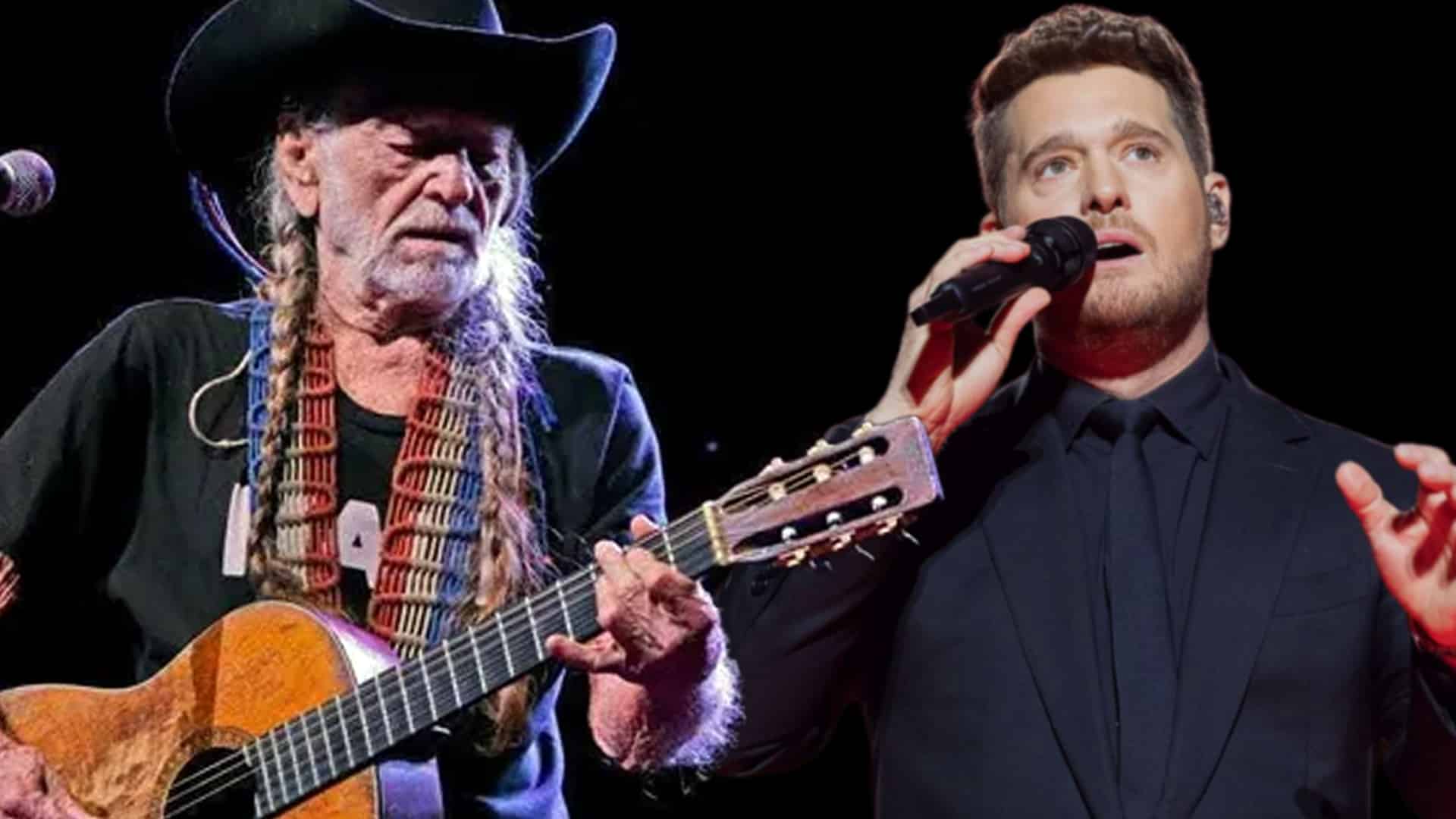
Willie Nelson’s voice sounds like it’s been aged in a barrel and dragged across 10,000 miles of open highway. Michael Bublé’s is more champagne than whiskey—smooth, clean, built for tuxedos and velvet curtains. On paper, putting them together on a country ballad written over 60 years ago feels like throwing a campfire into a concert hall. But somehow, against all odds, their duet of “Cr𝐚zy” works. And not just in a polite, novelty kind of way. It works because they don’t try to outmatch each other—they let the song do the heavy lifting.
Bublé included the duet on his 2022 album Higher. This record otherwise leans into orchestral jazz-pop and modern crooner territory. And yet, right in the middle of it is this slow-burning, stripped-down classic originally written by Nelson in 1961 and made immortal by Patsy Cline. Everyone knows her version. Some even forget it was Willie’s song to begin with. But Bublé didn’t. He told Forbes that while people often associate the tune with Patsy, Nelson’s raw delivery moved him most. “It wasn’t hers for me. It was always Willie’s.”
:max_bytes(150000):strip_icc():focal(749x0:751x2)/buble-nelson-1-8e50b6ab8a0c4962aeec5e9ac177ce15.jpg)
The track doesn’t try to reinvent the wheel. It leans in. Piano, a soft steel guitar, brushed drums, maybe a little string swell—but mostly just two voices standing on opposite ends of the genre spectrum, meeting somewhere in the middle. Willie delivers his lines with that weathered hush of a man who’s lived every lyric. Bublé answers with a warm, rounded tone, holding the phrasing just long enough to let it bloom before stepping back. By the chorus, they’re sharing space—not blending, but coexisting. And that’s what makes it compelling.

It’s not perfect. There are moments where you can hear the seams. Bublé’s polished style floats; Willie’s lines crack and twist. But that contrast is the point. The song feels lived in and loved, not repackaged. And with Willie pushing 90 at the time of recording, it lands like a conversation between generations—a gentle reminder that songs don’t belong to one voice. They outlive all of us.
There’s also something about the restraint here that feels like a quiet rebellion. Bublé could’ve gone full big-band drama. Willie could’ve phoned it in from his bus with Trigger on his knee. Instead, they stripped it down. They gave it space. Producer Bob Rock—more famous for loud rock albums than hushed country duets—kept it lean. No strings and horns blasting. Just breath, silence, and two legends giving each other room.