The Man Behind the Melody: Keith Urban’s Journey from Silent Pain to Radical Vulnerability
In the high-gloss world of country superstardom, Keith Urban has long been the gold standard of the “unshakable” professional. With his virtuoso guitar skills, a string of chart-topping hits, and a high-profile marriage to Nicole Kidman, Urban appeared to be a man who had mastered the art of living in the spotlight. However, a recent, raw moment of honesty has shattered that image, revealing a man who was not just performing his music, but surviving it.
In what critics are calling the “most vulnerable moment of his career,” Urban reportedly paused during an emotional interview, whispered, “I can no longer do this,” and allowed decades of suppressed pain to finally surface.

“I Was Trying to Survive”
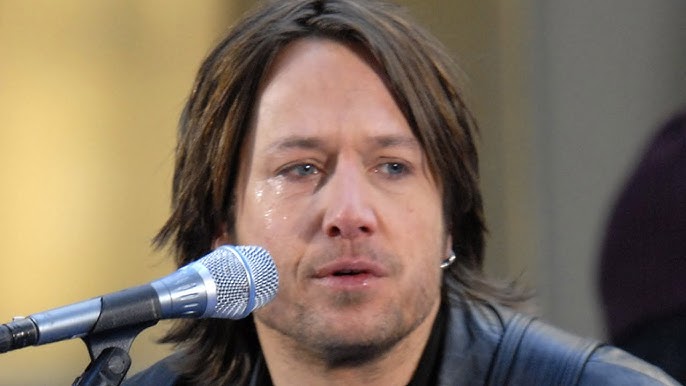
The revelation came during what was expected to be a routine sit-down. Instead, the “Blue Ain’t Your Color” singer turned the cameras into a confessional. With trembling hands and eyes red from the strain of holding back tears, Urban dropped the mask of the entertainer.
“I can’t keep hiding behind the music any longer,” he admitted, his voice barely audible. “I was trying to survive with every song you loved.”
For the millions of fans who have followed his journey—from his early struggles with addiction in the late 90s to his triumphant comeback—this admission recontextualizes his entire discography. Urban suggested that his greatest hits weren’t just commercial successes; they were “silent pleas for assistance.” Every high note was a cry for help, and every lyrics was a bandage on a wound that refused to close.
The Power of the “Broken” Icon
In an industry that often prizes a “tough it out” mentality, Urban’s breakdown is being hailed as an act of immense courage. The cultural narrative of the “strong, silent man” is being rewritten in real-time by one of its most prominent figures.
The room reportedly sat in a heavy, respectful silence as Urban struggled to regain his composure. He told the interviewers: “I wrote those songs to heal, but some wounds never heal.”
This sentiment resonates deeply with a global audience currently grappling with a mental health crisis. By admitting that even fame, wealth, and a beautiful family cannot instantly “fix” deep-seated emotional trauma, Urban has humanized himself in a way that a thousand stadium tours never could.
A Viral Wave of Empathy
Within hours of the footage hitting the internet, the response was overwhelming. The video garnered millions of views, but the truly remarkable story was in the comment sections. Fans didn’t just offer “get well” wishes; they shared their own stories of using Urban’s music to navigate their darkest hours.
- “We heard your pain in every note,” one fan wrote, acknowledging the unspoken connection between artist and listener.
- “You just proved that real courage is in breaking—not in singing,” another added, highlighting the shift in how society views male vulnerability.
Psychologists and cultural critics have noted that when an icon like Urban “breaks,” it gives permission to his audience to do the same. It validates the idea that being “naked, vulnerable, and human” is not a sign of failure, but a prerequisite for genuine healing.
The Music as a Mirror
Throughout his career, Urban’s songs have often dealt with themes of longing, regret, and the search for light in the darkness. Tracks like “Better Half” or “You’ll Think of Me” have always had an emotional edge, but now, listeners are hearing them through a new lens.
Urban’s admission suggests a profound truth about the creative process: for many artists, the work is not a choice, but a life raft. If he was “trying to survive” through his music, then his career has been one long, public act of resilience.
“Maybe This Time, I Finally Let The Music Heal Me Too”
As the interview drew to a close, Urban looked down, wiped a final tear from his cheek, and offered a glimmer of hope. “Maybe this time,” he said softly, “I finally let the music heal me too.”
This statement marks a potential turning point for Urban. For decades, he was the provider of healing for others—the man whose voice calmed the storms in his listeners’ lives. Now, he is stepping into the role of the recipient.
Conclusion: A New Chapter of Authenticity
Keith Urban’s “heartbreaking admission” isn’t a sign of an ending, but the beginning of a more authentic chapter. By ending his “decades of silence,” he has stripped away the artifice of celebrity to reveal the man underneath.
In 2026, as we seek more genuine connections in a digital world, Urban’s tears serve as a powerful reminder: the most beautiful music isn’t always the most polished—it’s the music that comes from a heart brave enough to break in public.